How Proper Homes Contribute to Child Growth
A home is more than shelter. For a child in Cambodia, the quality of their living environment shapes how their brain develops, how healthy they stay, and how well they learn. Whether in a rented room in Phnom Penh, a rural commune in other provinces, or a floating village along the Tonle Sap, stable and adequate housing is one of the most powerful — and most overlooked — investments in a child's future.
Cambodia faces a significant housing gap. Millions of families live in overcrowded, structurally unsafe, or flood-prone homes. The consequences fall hardest on children.
1. Physical Health
Children living in poorly built homes are far more vulnerable to illness. Leaking roofs, dirt floors, and lack of ventilation expose children to respiratory infections, skin diseases, and waterborne illnesses. Over 70% of rural Cambodian households cook with wood or charcoal indoors, leading to chronic exposure to smoke — a leading cause of pneumonia and stunted lung development in young children.
A proper home with a durable roof, clean water access, a functioning toilet, and a separate cooking area can reduce childhood illness dramatically. When children are healthy, they attend school more regularly, concentrate better, and grow stronger.
2. Cognitive Development and Learning
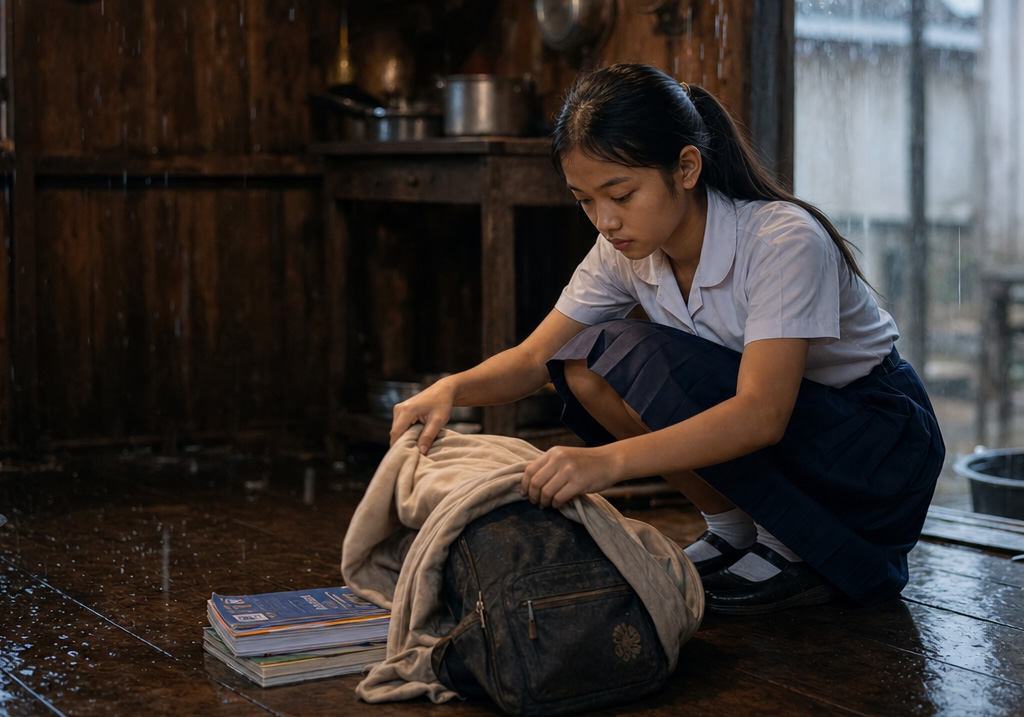
A child cannot learn well if they are cold, sick, or sharing a single room with six family members. Overcrowding creates constant noise and disruption that interrupts sleep and makes studying nearly impossible.
Homes with adequate space, a stable sleeping area, and access to electricity allow children to do homework after dark, sleep the hours their developing brains require, and benefit from a calmer, more focused environment. Research across Southeast Asia consistently shows that children in improved housing perform better in school and stay enrolled longer — particularly girls.
3. Emotional Safety and Mental Wellbeing
Children need predictability and security to develop confidence and resilience. Families living under the constant threat of eviction, seasonal flooding, or structural collapse experience chronic stress — and children absorb that stress deeply.
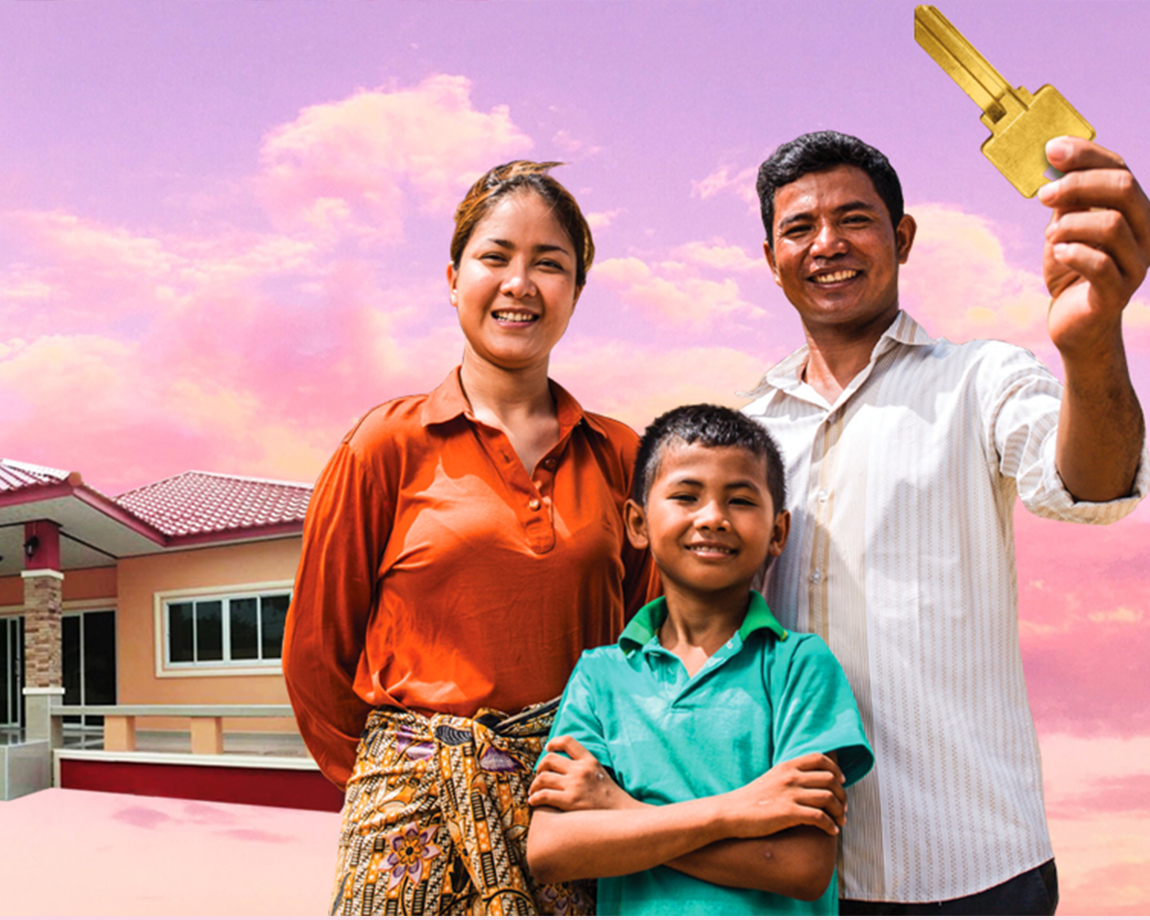
A secure home creates the psychological foundation for healthy development. Children who feel safe at home are more likely to form trusting relationships, engage in play, explore their environment, and build the social-emotional skills they need throughout life.
4. Nutrition and Early Childhood
Proper housing supports better nutrition. Homes with clean water prevent diarrheal disease, which is still among the top killers of Cambodian children under five. A proper kitchen space encourages safer food preparation. Secure housing also reduces the likelihood that parents are forced to spend income on emergency repairs or temporary relocation — freeing resources for food and healthcare.
Stunting — a sign of chronic malnutrition — affects nearly 28% of Cambodian children under five. Inadequate housing conditions are a direct contributing factor.
5. The Cambodia Context: Specific Challenges
Cambodia's housing and child development challenges have features that solutions must directly address:
- Urban overcrowding: Phnom Penh's rapid growth has outpaced housing supply. Families in informal settlements often live in 15–20 square meters with multiple children, with no study space and poor sanitation.
- Flood displacement: Communities along the Mekong and Tonle Sap face seasonal flooding that forces repeated displacement. Each disruption sets children back in school, nutrition, and emotional stability.
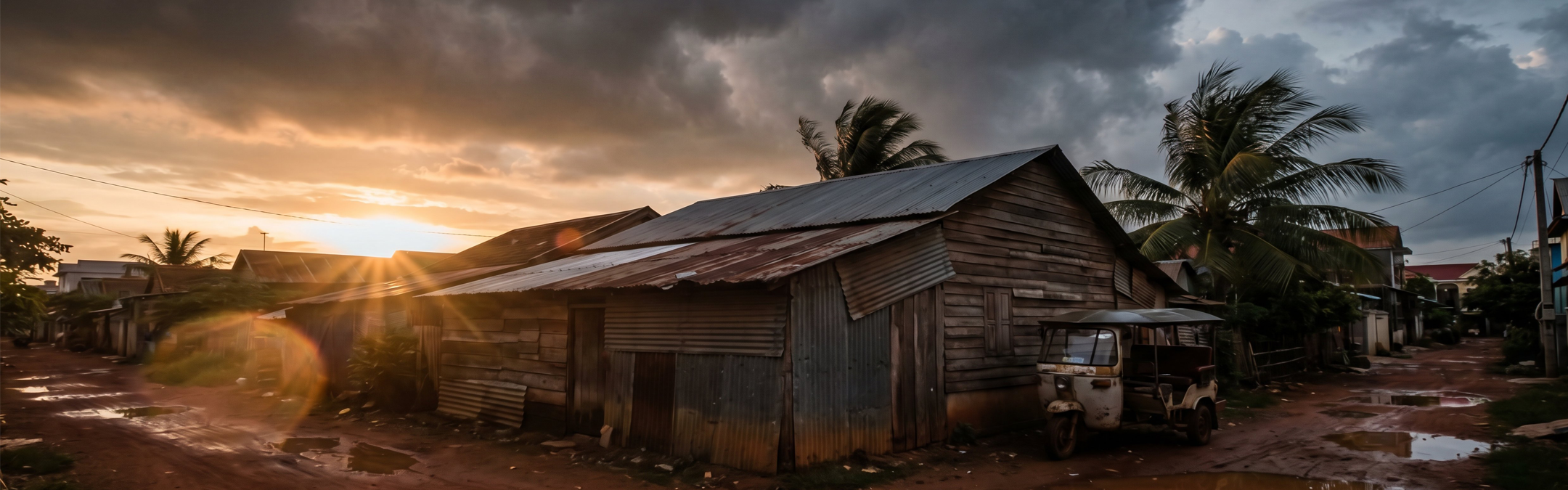
- Rural-urban gap: Rural families often live in traditional wooden homes that offer little protection from storms and provide no access to piped water or electricity — limiting children's development in ways that compound over time.
6. What Affordable, Child-Centered Housing Looks Like
Meeting children's developmental needs does not require expensive construction. Key thresholds that make the greatest difference include:
- A structurally sound, weatherproof roof and walls
- Separation of sleeping and cooking areas
- Access to clean water and a private toilet
- At least one enclosed sleeping room per two children
- Electricity for lighting and study after dark
- Location outside high-flood-risk zones, or flood-resilient design
These features are achievable in Cambodia at a construction cost of roughly $8,000 to $20,000 depending on location and materials — within reach when paired with appropriate financing.
7. Making It Affordable: Pathways for Cambodian Families
For families earning $200–$400 per month, homeownership through conventional lending is out of reach. Several mechanisms can close this gap:
- Microfinance housing loans through institutions like First Finance offer longer-term, lower-barrier financing for incremental home improvements and construction.
- Government affordable housing programs through the Ministry of Land Management, Urban Planning and Construction (MoLMUPC) target low-income families and civil servants, with opportunities to expand eligibility criteria toward child-development outcomes.
- Community land trusts allow groups of families to share land collectively, reducing speculative land costs and enabling individual home construction at significantly lower total cost.
- Incremental building approaches allow families to build one room at a time — starting with a solid foundation, roof, and water access — rather than waiting to afford a complete home.
Conclusion
A proper home is Cambodia's most scalable investment in its children. The gains — in health, learning, safety, and opportunity — compound across a child's entire life and across generations. Expanding access to adequate, affordable housing is not a welfare measure. It is a development strategy with returns that no classroom, clinic, or program can fully replicate without it.
When families have a stable home, children have a chance to grow into everything Cambodia needs them to become.